

About IOT Solutions
IoT (Internet of Things) technology refers to the network of physical devices, vehicles, appliances, and other objects embedded with sensors, software, and connectivity that allows them to connect and exchange data over the internet. The concept behind IoT is to enable these devices to communicate and interact with each other to collect and share data, ultimately creating a more connected and intelligent environment.
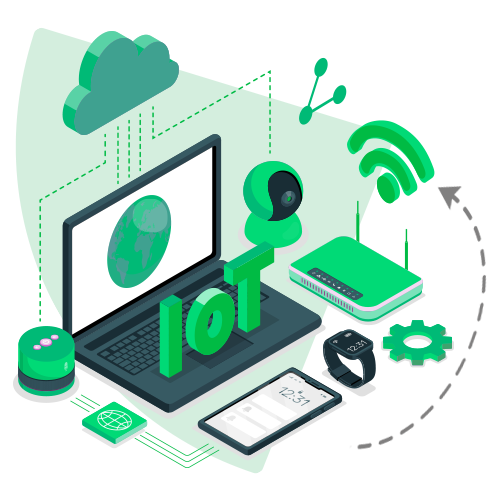
IoT Technology Involves The Following Key Elements:
Devices and Sensors
IoT devices are equipped with sensors and actuators that gather data from the environment or interact with it. These devices can include anything from wearable fitness trackers to industrial equipment.
Connectivity
IoT devices rely on various types of connectivity to transmit data. This can involve technologies such as Wi-Fi, Bluetooth, cellular networks, Zigbee, or other wireless communication protocols.
Applications and Services
IoT applications and services leverage the data collected to provide useful functionality. These can range from smart home automation to industrial monitoring and control systems.


Cloud Computing
Cloud platforms play a significant role in handling vast amounts of data generated by IoT devices. They provide storage, processing power, and hosting capabilities for IoT applications and services.
Data Processing
The data collected by the IoT devices is processed and analyzed either locally or in the cloud. This includes filtering, aggregating, and analyzing the data to extract valuable insights.
Iot Technology Has A Wide Range Of Applications Across Various Sectors, Such As
1. Smart Homes
IOT devices enable homeowners to control and automate various aspects of their home, including lighting, temperature, security systems, and appliances.
1. Industrial Automation
IoT technology helps optimize industrial processes by monitoring and controlling machinery, tracking inventory, and collecting real-time data for predictive maintenance.
2. Healthcare
IoT devices and sensors can monitor patient health conditions and provide remote healthcare services, improving the quality of care and enabling timely interventions.
3. Transportation and Logistics
IoT enables tracking and monitoring of vehicles, optimizing routes, managing fuel consumption, and improving supply chain efficiency.
Overall, IoT technology has the potential to revolutionize multiple domains by enabling smarter, more efficient systems and services through the interconnectedness of devices and the utilization of data-driven insights.